About the Collection
The Museum of Matica Srpska was founded in 1847 at the suggestion of Teodor Pavlović, the secretary of Matica Srpska. The Museum's collection expanded gradually, thanks to gifts from prominent citizens. However, the collection depended on the donors' taste and interest and did not have a clearly defined character. The Serbian painters, recipients of Matica Srpska's scholarship, played a major role in the collection's formation. The scholarships enabled Serbian painters to study all over Europe. They learned about current artistic trends at prestigious European schools and universities, bringing their knowledge and ideas back to Matica Srpska. These painters significantly influenced the perceptions of contemporary art and also the formation of the 20th-century collection. Apart from the exhibition space, Matica srpska's journals were open to contemporary authors and modernist ideas. Nadežda Petrović, the progenitor of Serbian modernism, published an account of Marko Murat's exhibition in Letopis Matice Srpske in the year of affirmation of her contemporary artistic aspirations, 1904. In the following years, many contemporary artists published their texts in Letopis and conducted polemics about current artistic practice. A significant year for shaping the determination of Matica Srpska was 1927, when the "Sixth Yugoslav Art Exhibition" was organized. The exhibition commemorated the centenary of the foundation of Matica Srpska, bringing together contemporary artists from the territory of the Kingdom of Yugoslavia. The next stage was the opening of The Museum of Matica Srpska to the public in 1933. With the re-establishment of the regular Museum's work after the Second World War, the "First Exhibition of Vojvodina" was opened. Among the numerous objects of the archaeological and ethnographic collection, there were also works of fine art created in the interwar period. The setup thus formed was the basis for the next major turning point - the establishment of the Matica Srpska Gallery as an independent institution dedicated to fine arts. Obtaining its own building encouraged the number of purchases made during the fifties and sixties of the 20th century. Exhibition "Collection as a mirror". Modernism in the works of the Matica Srpska Gallery" represents one of the exhibitions of the Matica Srpska Gallery and provides an insight into the long journey that Serbian and Yugoslav painting has taken from academic realism to abstraction.
Uroš Predić
Uroš Predić was born in Orlovat in 1857. He studied painting at the Academy of Fine Arts in Vienna from 1876 to 1880. Predić was a recipient of Matica Srpska's scholarship from 1877 to 1883. Having temporarily returned to his native Orlovat, the painter continued his career in Belgrade. Uroš Predić spent the First World War in exile in Kruševac. He used to spend his time in Novi Sad as he was professionally linked to Matica srpska. Uroš Predić used to be commissioned to make portraits of Matica's benefactors. He also created designs for book covers, calendars and diplomas. Uroš Predić was elected an honorary member of Matica Srpska in 1927. He then became honorary president of the Board of the Museum of Matica Srpska. The painter was elected a corresponding member of the Serbian Royal Academy in 1909 and a full member in 1910. He had his first solo exhibition in Belgrade in 1888. Among Predić's contributions is the foundation of the artistic group "Lada" (1904) and the Association of Fine Artists in Belgrade (1919). At the Vienna Academy of Fine Arts, the famous Serbian painter adopted the undisputed Viennese academicism. Thanks to the style of "academic realism, " he gained top affirmation and recognition in Serbian art history. His vibrant painting oeuvre includes portraits, historical and religious compositions. Uroš Predić worked on iconostases for the church in Novi Bečej, the Orthodox Church in Orlovat, the Preobraženska church in Pančevo.
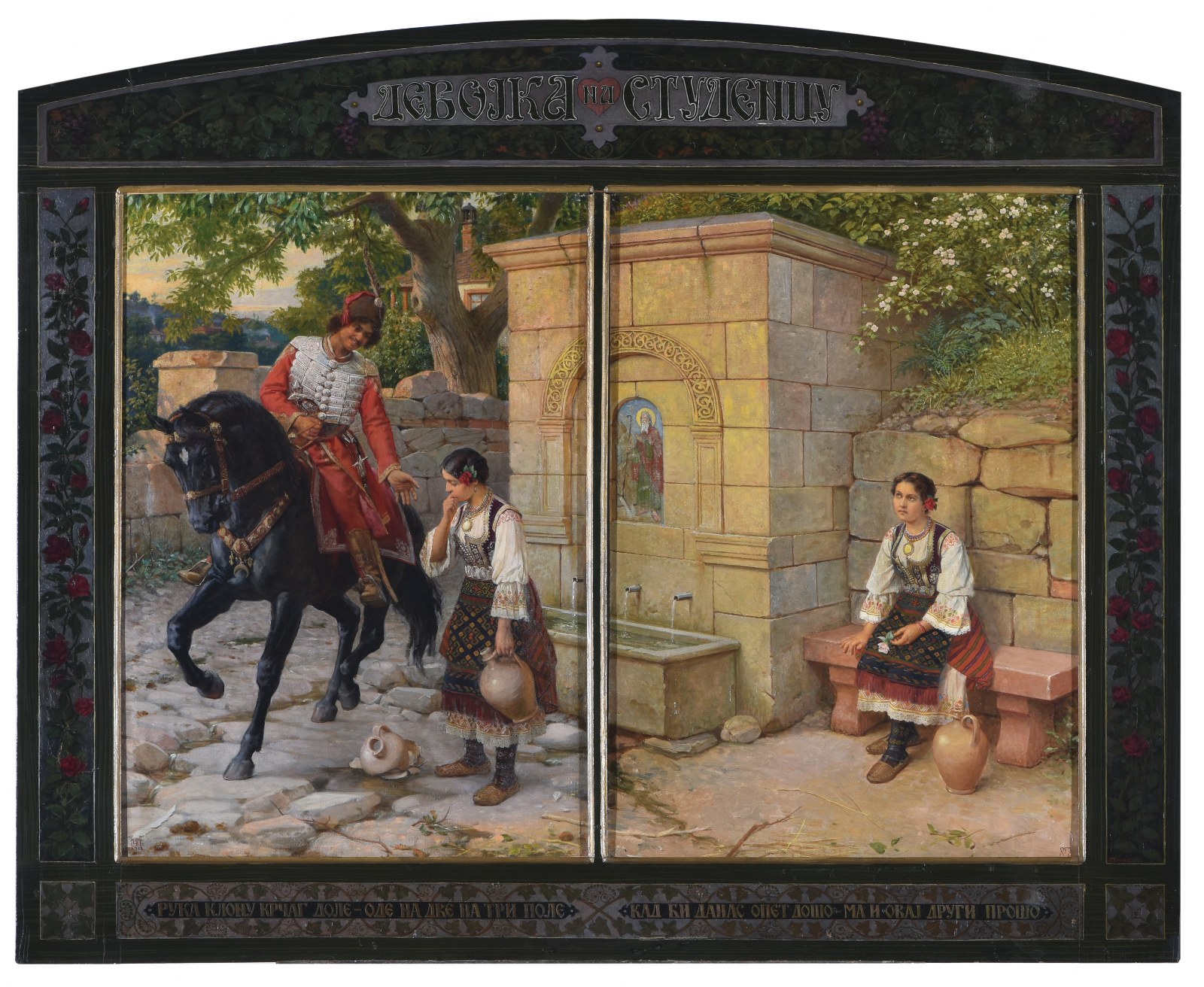
During his long creative life, Uroš Predić remained faithful to academic rules and emphasis on drawing and clarity of composition, resisting the aspirations of contemporary painting. Djevojka na studencu represents one of these Predić's works
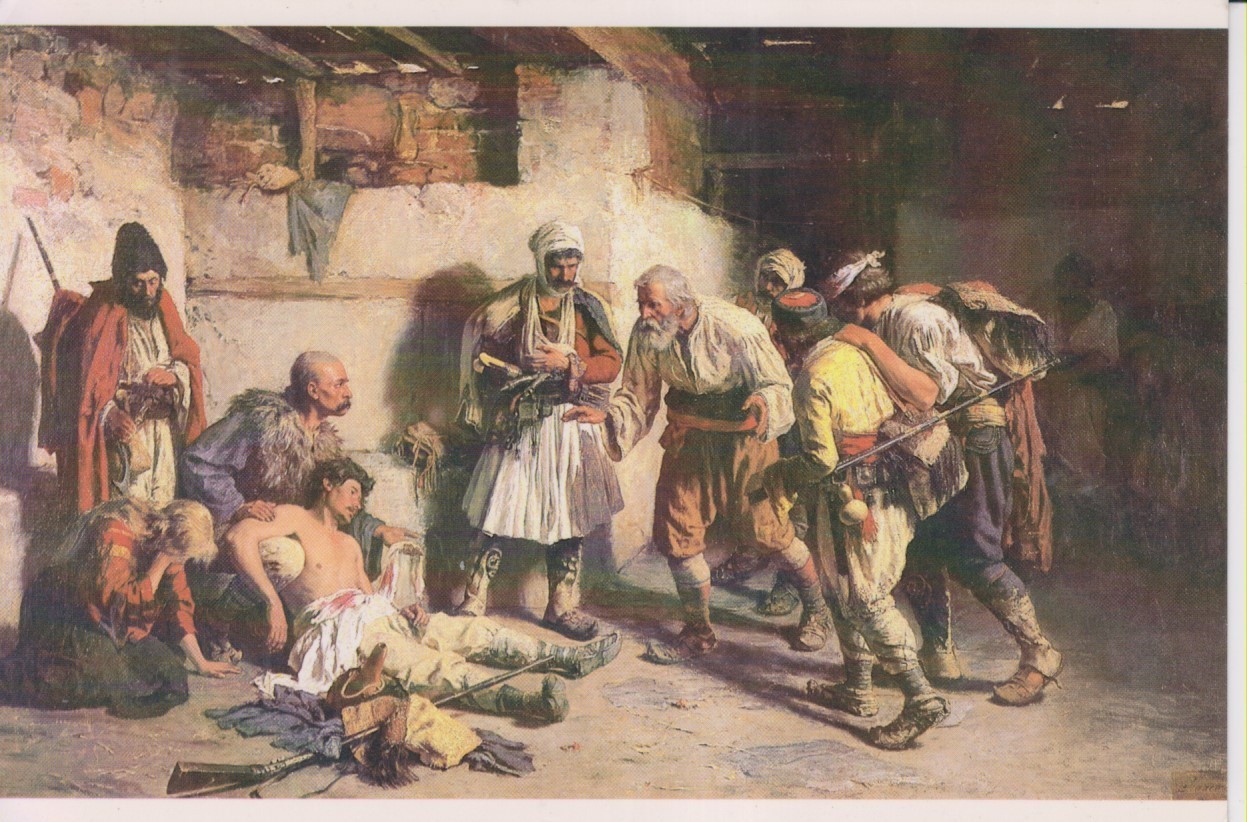
When he was only 21 years old, his painting "The Wounded Montenegrin" received a scholarship award. This painting is an oil on canvas, painted in 1882. It shows a wounded young man surrounded by peasants in traditional costumes. Jovanović painted four versions of this painting, three oil paintings and one sketch. Art historians consider the The Wounded Montenegrin one of Jovanović's best orientalist works.
Paja Jovanović
Paja Jovanović was born in 1859 in Vršac, in an artistic family. His father, Stevan Jovanović, was a painter. Paja spent his free time in the church observing and painting icons from an early age. He studied painting at the Academy of Fine Arts in Vienna with Professor Christian Grippenkerl. Paja also received additional skills at the master school for historical composition. For the painting The Wounded Montenegrin, he received an award in the form of a scholarship, which enabled him to continue his education. After studying in Vienna, he signed a ten-year contract with the famous gallery in London and moved there at the end of 1883. Paja was living in Munich and Paris but returned to Vienna. He found inspiration for paintings in his frequent travels. Paja also fell in love with languages through his travels, learning as many as five foreign languages. He was elected a corresponding member of the Serbian Learned Society in 1884 and a regular member of the Serbian Royal Academy four years later. He was elected an honorary member of Matica Srpska in 1927 and a regular member of the Serbian Academy of Sciences in 1948. During his lifetime, he received numerous world awards and distinctions. He left behind a vibrant and extensive artistic oeuvre. He created in all painting genres, such as portraits, church paintings, landscapes, and scenes from folk life. Historical compositions are particularly important, among which is the famous Coronation of Emperor Dušan, part of the exhibition Collection as a Mirror. A special quality of Paja Jovanović lies in his drawing, which stands out for its academic precision. Paja Jovanović was painting in the spirit of academicism or academic realism. Academicism is one of the styles that characterized European art in the second half of the nineteenth century. The idea of this artistic direction is the smoothness of the work, often using the chiaroscuro technique of the baroque painter Caravaggio. These painters, like Jovanović himself, were inspired by the themes of mythology and history and painted them on large canvases. Paja Jovanović did not like to give names to his paintings because he believed that the painting itself should convey the story. He used to say: "Woe to that picture to which the painter has to write a title. That picture is not good. It is a good picture from which the viewer can read what it says without a title." He died on November 30, 1957, in Vienna.
Nadežda Petrović
Nadežda Petrović was born in Čačak on October 11, 1873. She received her first artistic education in the studio of Đorđe Krstić. She began her painting studies in Munich, where she first encountered plein-air painting. After returning to Belgrade, she was one of the organizers and founders of the First Yugoslav Art Exhibition (1904). The following year, Nadežda established the "Lada" art association. She founded the First Yugoslav Art Colony in Sićevo and participated in the founding of the Serbian Art Association (1907). Nadežda Petrović held her first solo exhibition in 1900 in Belgrade. She exhibited with the art groups "Lada" and "Medulić", as well as at numerous group exhibitions in the country and abroad (Munich, Paris, Lyon, Rome, Hanover). In addition to painting, she was engaged in photography and art criticism and actively participated in Serbia's cultural, social and political life. The diverse creativity of Nadežda Petrović brought significant innovations to Serbian painting. Intense colours place the painter among the forerunners of colouristic expressionism. Her painting Dereglija on the Sava from 1907 is considered one of the first manifestations of Impressionism in Serbian painting. Nadežda painted Serbian landscapes, as well as Serbian peasants. Her creativity includes almost three hundred oil paintings, about a hundred sketches, and several watercolours. In addition to expressive colours and elements of Impressionism, she introduced Secession, Symbolism and Fauvism into Serbian painting. During the Balkans and the First World War, Nadežda was also involved in photography as the first female war photographer.
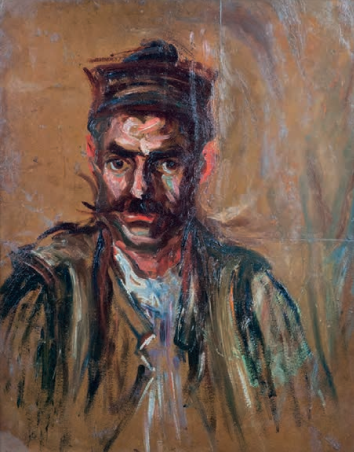
From 1911 to 1912, she stayed in Paris, where she exhibited at the Autumn Salon. On that occasion, Nadežda became acquainted with contemporary painting trends, which she transferred to Serbian painting. She is one of the founders of the Circle of Serbian Sisters (1903), and she fulfilled her need for social and humanitarian work as a volunteer nurse in the Balkan Wars and the First World War. While performing her duties as a nurse at the Infectious Military Hospital in Valjevo, she fell ill and died of typhus in 1915.
Ana Marinković
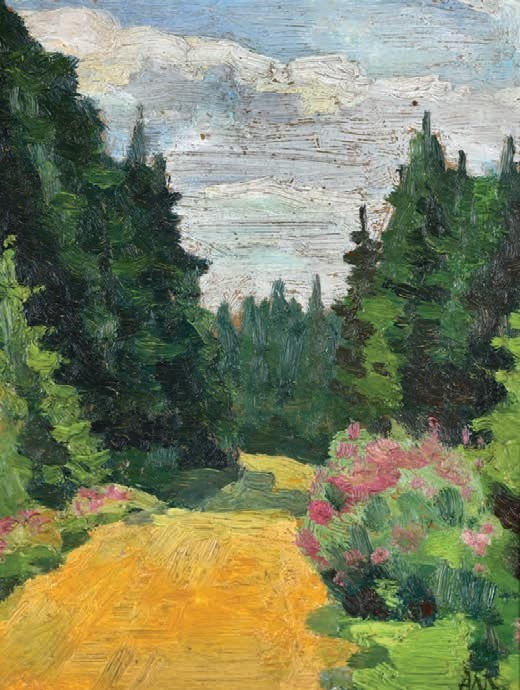
Ana Marinković was born in Belgrade in 1882 in the famous Lozanić family. Her father, Sima Lozanić, was the first rector of Belgrade University. Her mother, Stanka, born Pačić, was a passionate humanitarian worker. Ana received her first artistic education privately with the painter Nadežda Petrović. After founding the School of Arts and Crafts, she became one of its first students. Ana learned from Risto and Beta Vukanović, as well as from Marko Murat. Like most painters from the beginning of the 20th century, she spent some time in Paris. He also studied in London. In the Balkan wars and during the First World War, she was a volunteer, and together with the soldiers, she crossed Albania and came to Corfu. After the war, Ana returned to Belgrade and continued painting. Since 1911, she became a member of the artistic group "Lada", and one of the founders and the first president of The Association of Friends of Art of Cvijeta Zuzoric". Ana exhibited at numerous group exhibitions, among which is the Fifth Yugoslav Exhibition in Belgrade, as well as exhibitions in Skopje, Split, Kragujevac, Ljubljana. Ana Marinković's oeuvre is dominated by the landscape from the surroundings of Belgrade, as well as scenes of interiors and still life. She remained devoted to the impressionist style painting
Zora Petrović
Zora Petrović was born in Dobrica in 1894. She studied painting at the School of Arts and Crafts in Belgrade from 1912 to 1914, where she was taught by Milan Milovanović, Đorđe Jovanović and Marko Murat. From 1915, she continued her studies in Budapest. In 1919 Zora returned to Belgrade and enrolled in the third and final year of the School of Arts and Crafts. From July 1925 to August 1926, she was in Paris, attending Andrea Lotta's painting school for three months. From 1920 to 1950, Zora worked as a teacher in Belgrade secondary schools, and from 1952 she was a professor at the Academy of Fine Arts in Belgrade. Zora was a member of the artistic groups "Lada" (1924–1927), "Oblik" (1928–1931), "Dvanaestorica" (1938) and "Samostalni" (1951–1956). She became a corresponding member of the Serbian Academy of Sciences and Arts in 1961
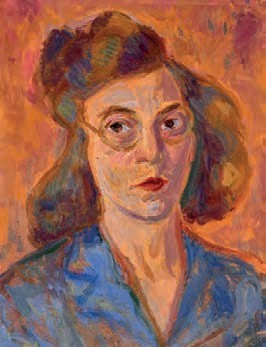
Zora Petrović's painting is based on an emphatic, fast, broad brush stroke without unnecessary details. Her paintings' subjects are interiors, portraits, and women from the people. The figures in her paintings often are deformed and anatomically distorted but full of inner strength and sincerity of chromatic sound. The paintings are filled with thick colour and light that emphasizes the shapes. Zora Petrović laid these painting foundations in the thirties of the 20th century and remained faithful to that stylistic expression until the end of her life.
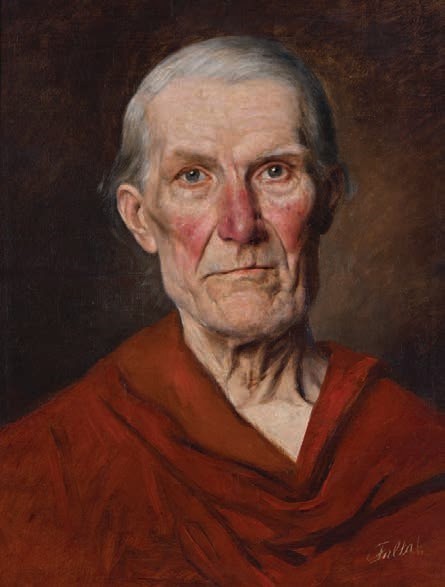
Josif Falta
Josif Falta graduated from high school in Novi Sad. He was engaged in drawing and painting from an early age. Thanks to Matica Srpska, he received a scholarship to continue his artistic education at the Academy of Fine Arts in Vienna, where he stayed from 1888 to 1892. After successfully completing the Academy, he spent another year at the Academy in Munich with a new Matica scholarship. In the middle of 1893, he got a position as a drawing teacher in Sarajevo's Gymnasium, where, unfortunately, he spent only one school semester due to his premature death. He observed pictures of everyday life in Munich. He was inspired by ordinary people rather than great mythological and historical compositions. Even as a student, he began to paint in the oil on canvas technique, and he often commissioned portraits of contemporaries. He also made a small number of icons for the stone cross. The painting Portrait of an Old Woman, probably created in the studio of one of the professors, testifies to the artistic interests that Munich awakened in him, and the landscape Predvečerje speaks of Falta's interest in turning to impressionism. This new current increasingly gripped Munich. In addition to a small number of oil paintings, his studio drawings and illustrations published were published in Serbian magazines and journals. A short artistic activity, interrupted at the time when he should have created the best works, testifies to Josif Falta as a skilled draftsman. He prefered realism in portraiture and impressionism in landscape.
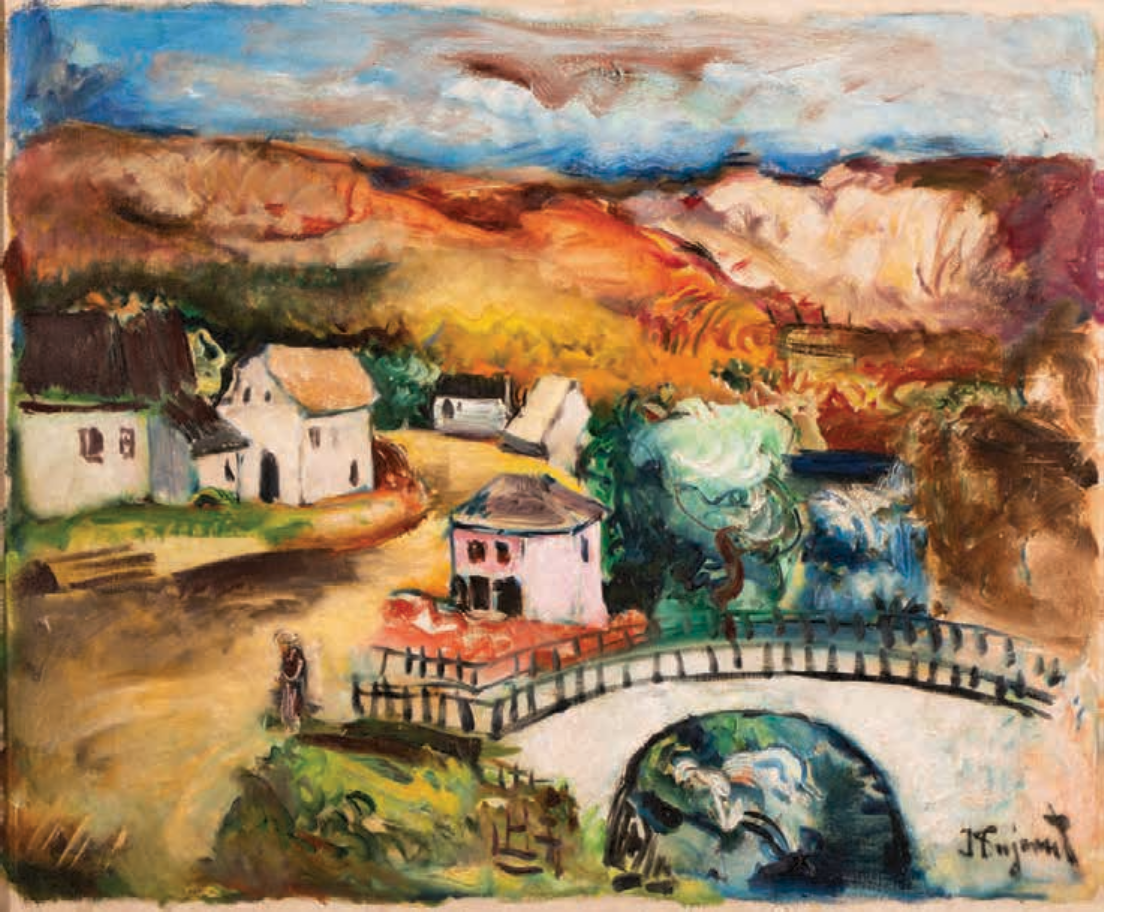
Jovan Bijelić
Jovan Bijelić was born near Bosanski Petrovac in 1884. After completing two grades of high school, Bijelić transferred to the Zemaljska zanatlijska škola (1903–1906) in Sarajevo. He attended the Art Academy in Krakow from 1908 to 1913. From November 1913 to June 1914 Bijelić continued his art education in Paris. In 1915, the painter enrolled in the Academy of Fine Arts in Prague, where he studied with professor Vlaho Bukovac. In the same year, he returned to Bosnia, accepting a position of a drawing assistant at the Velika Gymnasium in Bihać. In 1918, the painter moved to Belgrade, working as a scenographer of the National Theatre. Bijelić received several important awards and recognitions: second place at the International Exhibition of Decorative and Industrial Arts in Paris in 1925, an honorary diploma at the International Exhibition in Barcelona in 1929 and an honorary diploma at the World Exhibition in Paris in 1937. He was also awarded the Order of Merit for the People, 1st Class, in 1956, and the Seventh of July Lifetime Achievement Award of Serbia in 1960. He exhibited for the first time in 1912 in Sarajevo and then in Sofia, Plovdiv, Prague, Thessaloniki and Rome. He had retrospective exhibitions in 1957 and 1964 in Belgrade. After the Impressionist and Cezanne phases (1917–1920), Bijelić moved closer to abstract expressionism, which later became more figurative and solid in volume and form. Around 1929, his artistic expression evolved towards coloristic expressionism. He left behind over a thousand works, mostly oil on canvas, but also works in other techniques such as tempera, watercolour and pencil.
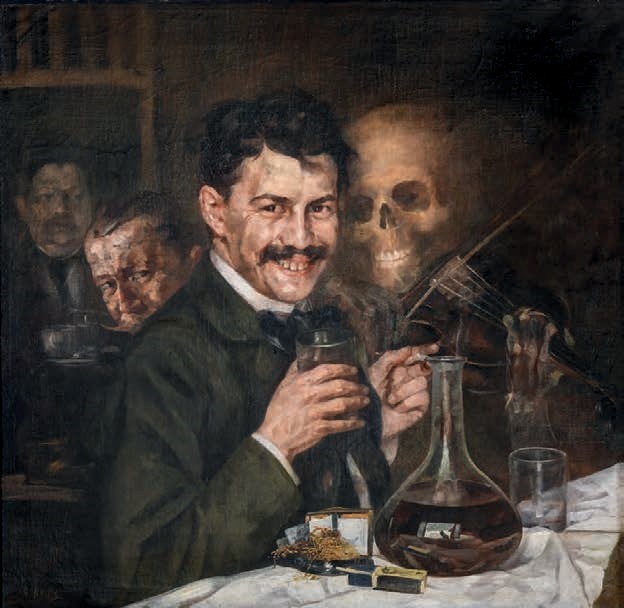
He often depicted tavern motifs in his paintings, which encouraged him to put himself in such an environment. Having painted a self-portrait, he shows himself with a glass in his hand, a bottle of wine next to him, smiling and cheerful, while right next to him is a skeleton playing the violin. This skeleton represents death, and the violin represents the quiet music we call life, which is constantly passing, and in this way the painter reminds himself of the transience of life itself and represents the famous motto Memento mori. It can be noticed that in this painting the artist goes into symbolism and thus becomes one of the first painters who introduces elements of this direction into Serbian art.
Stevan Aleksić
Stevan Aleksić was born in an artistic family. He received his first artistic lessons from his father, and then he went to Munich. He prepared for the Academy of Painting, which he entered in the fall of 1896, and graduated four years later in the class of Professor Nicholas Gizis. He finished his studies thanks to financial help from his older brother Ivan and a scholarship from Matica Srpska. In 1900, after his father's death, he left Munich and worked on the iconostasis of the Serbian church that his father had started. Then he settled with his mother in Arad and opened a painting school there. From then until the beginning of the First World War, his extensive works in the field of church painting can be traced. In addition to individual icons and complete iconostases, Aleksic mostly painted wall paintings in Serbian churches and often restored the works of his grandfather Nikola Aleksić. He left a rich artistic mark in churches in Arad, Timișoara, Čakovo, Novi Sad, Vukovar, Lukićevo, Modoš, Bešenovo and Pančevo. He spent the war years in Modoš, where he remained until the end of his life. The painter participated in the Autumn Salon in Budapest in 1902, in the First Serbian Art Exhibition in Sombor, in the Fourth Yugoslav Art Exhibition in Belgrade, in the Exhibition of the Art Association in Szeged in 1917, and he held his first solo exhibition in Timisoara in 1918. He painted icons and portraits, among which numerous self-portraits and popular genre-scenes from tavern life stand out. In the history of Serbian art, Aleksić painted the largest number of self-portraits (41), often composing them as genre-scenes. His creativity was inspired by the artistic currents of the time - academic realism and secession, but marking it with a strong personal feature. Starting from realism, he was simultaneously occupied with romantic and symbolist themes, so that he would try his own expressionistic process towards the end of his life.
Milan Konjović
Milan Konjović was born in 1898 in Sombor, where he gained his elementary and high school education. As early as 1914, Konjović organised his first solo exhibition in his hometown. Primarily admitted to the Teacher's School in Sombor, he entered the Academy of Fine Arts in Prague in the class of Vlaho Bukovac. Konjović left the Academy and continued his artistic training in Vienna, Munich, Berlin and Dresden. The painter lived in Paris from 1924 to 1932. The French capital, the world's artistic centre, greatly impacted the painter. Having travelled throughout Europe, Konjović returned to his native Sombor. Konjović went through several phases. During his work's early phase (1913-1928), Academicism, Cubism and Neoclassicism prevailed. Thus, Konjović accepted some of the main goals of academism, namely the completeness and smoothness of the picture. The motifs that inspired this movement's followers were mythology and history. In addition, they painted landscapes, portraits and still lifes using large canvases. Konjović learned about Neoclassicism principles, which rely on the art of Greece and Rome. The painter's "blue phase" began in Paris and lasted from 1929 to 1933. He perceived the colour of blue as endless sleep and a transition to eternity. The beauties of Dalmatia inspired the creation of the red phase that lasted from 1934 to 1939. During this period, which represents the artist's full maturity, Konjović used brown and red colours, which meant blood, life, and earth. These colours contrasted with the blue that pulls to the heights. Konović's "grey phase" period began under the influence of the Second World War and socialist realistic art, lasting from 1940 to 1952. During this phase, caricature-conceived characters became the dominant motif. The year 1953 represented another turning point in Konjović's painting. The relationship to the object became freer, and the colour palette more intense, marking the beginning of his "colouristic phase", which ended in 1960. The painter's "associative phase" (1960-1984) brought him closer to abstract art since the works from this period were reduced to symbols and signs. The last period was the "Byzantine phase" since icons and frescoes inspired him. The artist tried his hand at numerous painting techniques and worked with theatre scenography and costumes. He presented himself at almost 300 individual and 700 collective exhibitions. Konjovic's oeuvre includes about 6,000 works.
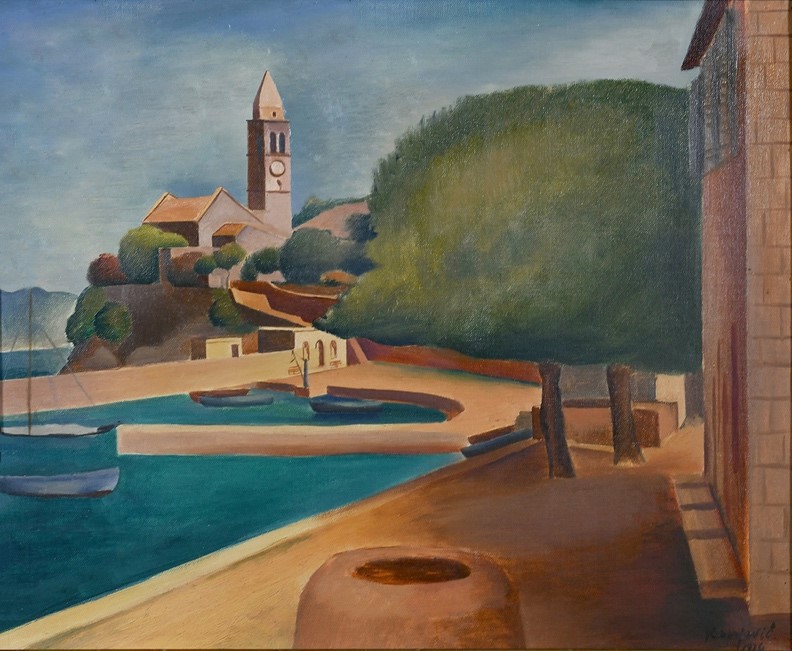
The painting belongs to Konjević's pre-expressionist phase, i.e. Cubism. It was created before his departure to Paris. Painted with sharp lines and cold colours, it indicates a search for one's origins through experimentation with artistic language and form.
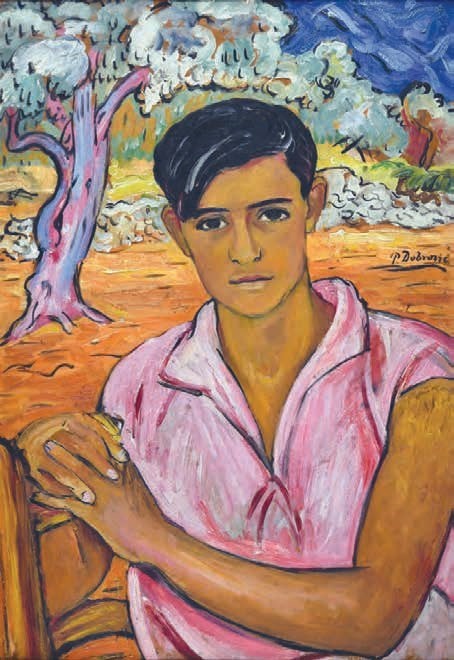
His most famous work is Margarita, which clearly demonstrates Fauvism's influence. The colours used by the Fauvists do not correspond to those in the real world. One of the examples is the pink tree.
Petar Dobrović
Petar Dobrović was born on January 14, 1890, in Pečuj. He gained his artistic education at Budapest's Art and Craft School and Fine Arts Academy. It was in Pečuj in 1912 that Dobrović had his first solo exhibition. Dobrović was one of the founders of the Art Group "Oblik". He founded and led an evening course in figure drawing at Kolarac and collaborated with the newspaper "Danas". He loved Novi Sad and married Olga Hadži, a native of the city. In the following period, Dobrović worked and lived in Belgrade and Paris. Reasonably, it was in France he encountered Fauvism. Fauvism, launched by Henri and Matisse, greatly influenced Dobrović's further creativity. The Fauvists got their name from the French word for beast because their colours and the way they were applied were so intense that the French used that term to describe them. Dobrović was committed to hedonistic painting, which gave his paintings an extraordinary shine. Dobrović was exceptional as he set the form and composition of the pictures from the very beginning. He based his works on classical compositional solutions. Apart from Fauvism, he went through Impressionist and Cubist phases. Some of his works are A young man in an evening landscape, Margarita, Marcel, Old port in Dubrovnik, Landscape with the sea, and Street in Hvar. Mediterranean landscapes, fruits, vegetables, olive groves, and naked bodies were the subjects of this artist, which showed what painting could do when using colour and light.
Sava Šumanović
Sava Šumanović was born in Vinkovci in 1896. He received his artistic education in 1914 in Zagreb at the Higher School of Arts and Crafts. From 1917 Sava began to participate in exhibitions of Yugoslav artists regularly. He had his first solo exhibition in 1918 in Zagreb, and in 1919 he participated in the Exhibition of Yugoslav Artists in Paris. It was 1920 when Sava arrived in Paris for the first time and learned in the studio of Andrea Lott. After returning to Zagreb, he worked as a librarian at the Museum of Arts and Crafts and published the texts "The Painter on Painting" and "Why I Love Poussin's Painting". During Sava's second stay in Paris (1925–1928), his successes were noticed - the painting Breakfast on the Grass was published in the prestigious magazine L'Art Vivant. He painted a column in the restaurant "La Coupole" and exhibited the painting Drunken Ship in the Salon of Independents. Sava left the French capital in 1930 and returned to Sid. He exhibited independently in Zagreb and Belgrade and presented himself at group exhibitions with Yugoslav artists in London, Amsterdam and Brussels. After the outbreak of World War II, Sava was a conscripted soldier. He was arrested in the Ustasha raid in 1942 and shot in Sremska Mitrovica. The ideas of moderate cubism he encountered at the school of Andrea Lott are visible in Šumanović's artistic expression and in the reducing forms to cold geometric colour. He painted mostly landscapes and nudes. Female figures were dressed in a national costume and placed in a colorfully colored landscape, indicating the aspiration to search for national peculiarities and abandoning the Parisian trends. Returning to Šid, Šumanović built his own monumental style, immortalized in the last cycle of Šidianka.
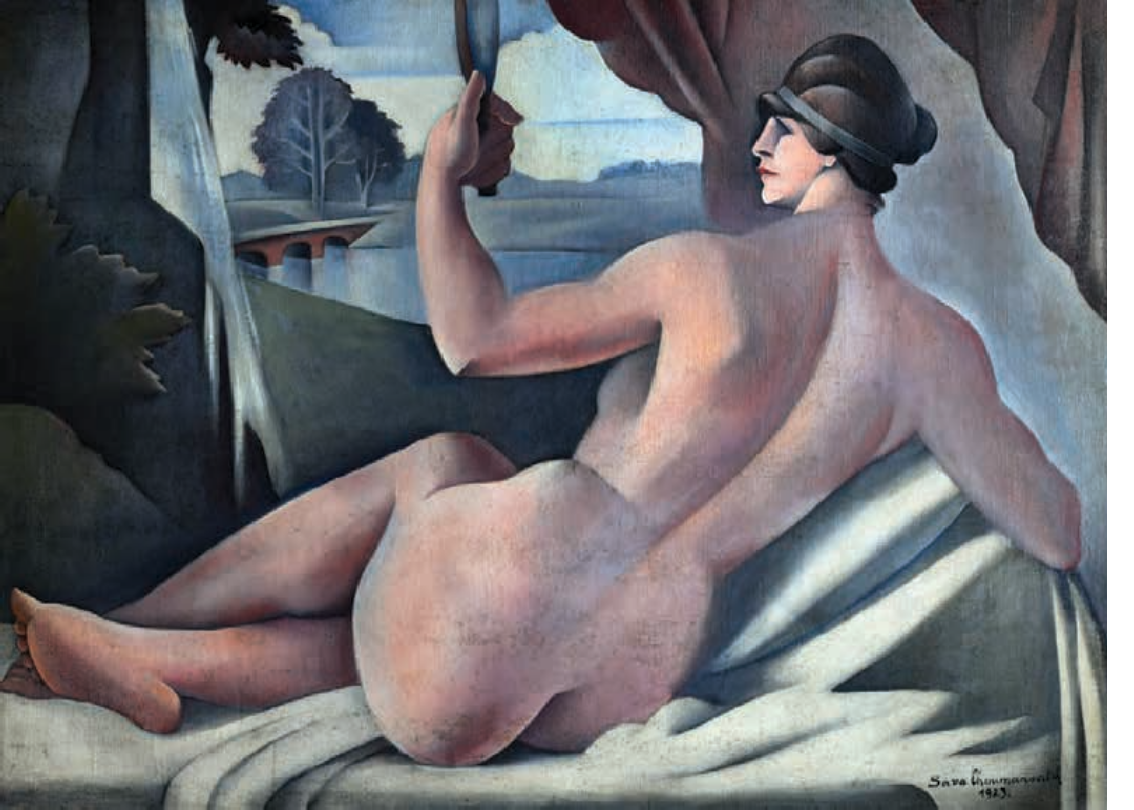
Among the motifs that Sava Šumanović shows in his paintings are female nudes. Female nude with a mirror shows the motif of the female naked body and the features of moderate cubism that are embedded in Sava's artistic representation of the world.
The Montenegrin hills remained permanently engraved in Lubarda's artistic memory. The visual landscape can be recognized in his oeuvre, and the picture of Durmitor is one of these examples. Even more importantly, the painting marked Lubarda's transition into abstraction.
Petar Lubarda
Petar Lubarda was born in 1907 near Cetinje. After a short artistic education in Belgrade, Lubarda moved to Paris, attending the Academy of Fine Arts. He displayed notable exhibitions during his first stay in the French and world artistic metropolis, as his works appeared in the Salon of Independents. However, it was in Rome that he had his first significant solo exhibition. The painter returned to Yugoslavia in 1932, settling in Belgrade, and actively participating in artistic life. As early as 1938, he settled in Paris again, from where he travelled to Spain, Germany, Algeria, Tunisia and Egypt. Lubarda spent the war period as a prisoner in Austrian and Italian camps. After the Second World War, the painter became intensively involved in Socialist Yugoslavia's artistic life. In 1945, he was appointed associate professor at the Academy of Fine Arts in Belgrade. As soon as 1946, Lubarda moved to Cetinje, where he founded the first Art School in Montenegro in collaboration with Milo Milunović. Lubarda became a member of the artistic group "Lada" and one of the founders of the Association of Fine Artists of Montenegro. While the painter's stay in Paris marked a search for his artistic expression, it was in Montenegro where his aspirations became clearer. Lubarda was most often inspired by the landscape, the starting point around which he built a specific inner vision and epic-dramatic picture of the world, culminating in creating a national variant of associative abstraction in the sixth and seventh decades of the 20th century. His participation in the exhibition held in 1951 in Belgrade marked a new phase of Yugoslav painting. Namely, associative abstraction followed the previous era of socialist realism. Petar Lubarda died in 1974 in Belgrade and was buried in Belgrade's Alley of Deserving Citizens. It was 23 years after Lubarda's death when the prestigious award "Peter Lubarda" was established. On the occasion of the 115th anniversary of his birth, a postage stamp was published in Serbia.